Calvin Eden: When Your Students Trusts AI Over You
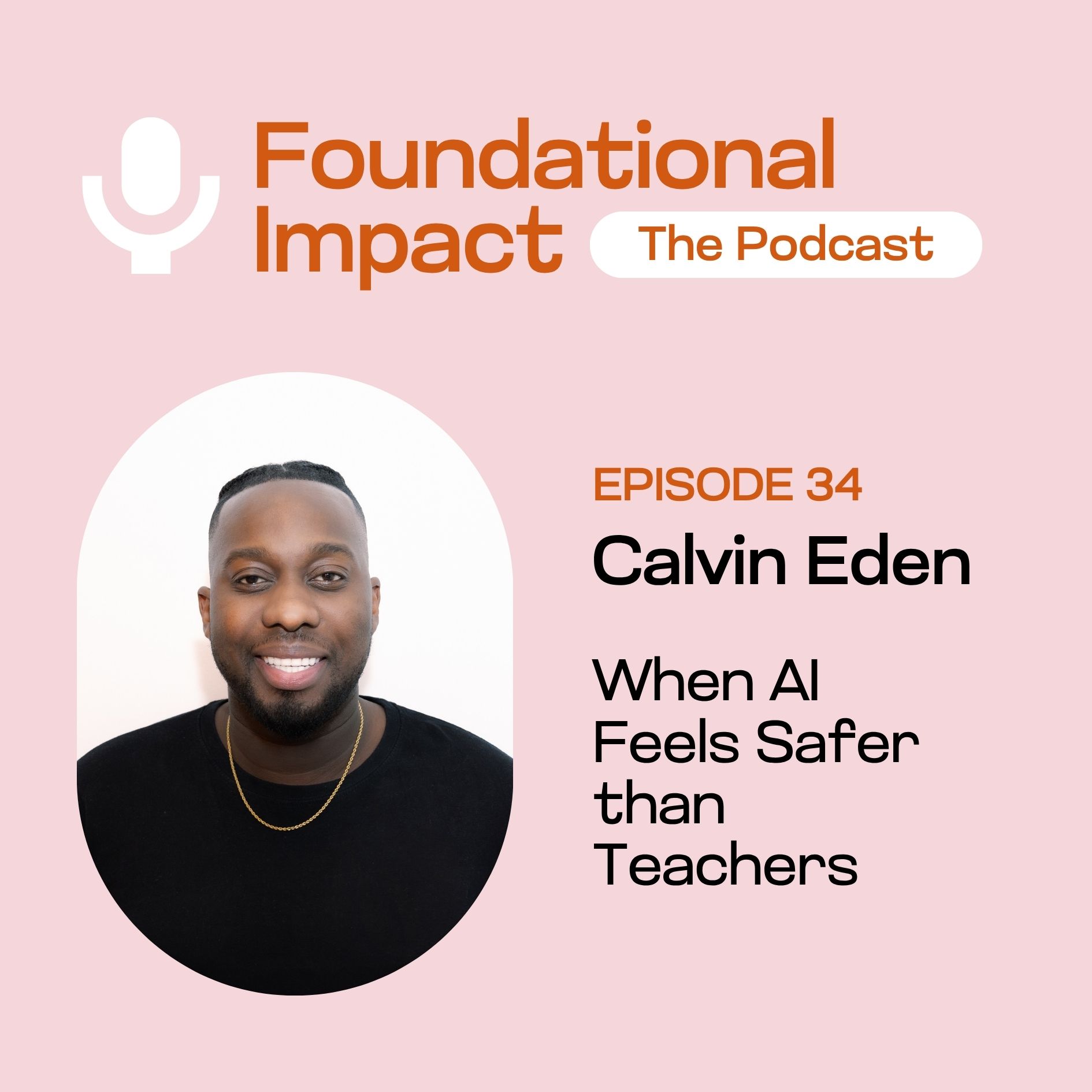

From personal tragedy at the age of 15 to becoming one of the UK's most renowned CPD and youth development speakers, Calvin's inspiring journey is a testament to resilience.His captivating presence and ability as a speaker have not only transformed thousands of lives, but also led him to collaborate with esteemed organisations such as the Chelsea FC Foundation, Prince's Trust, and Robert F. Kennedy Human Rights Foundation, and also host a range of prestigious events and appear regularly on national television talk programmes.Calvin is also the host of the Bigger Than Blackpool podcast, where he shares powerful conversations and insights designed to inspire ambition, broaden perspectives, and encourage individuals to think beyond perceived limitations.As CEO and keynote speaker, Calvin brings authenticity, energy, and lived experience to every stage — inspiring audiences not just to overcome adversity, but to redefine what’s possible.
Transcription
Daniel Emmerson 00:01
Welcome to Foundational Impact, a podcast series that focuses on education and artificial intelligence from a nonprofit perspective. My name is Daniel Emmerson and I'm the Executive Director of Good Future Foundation, a nonprofit whose mission is to equip educators to confidently prepare all students, regardless of their background, to benefit from and succeed in an AI infused world.
Daniel Emmerson 00:28
Welcome everybody once again to an edition of Foundational Impact. It's wonderful to have you with us. I'm joined by a very, very special guest today. We have Calvin on the call from Loudspeaker. Calvin, how are you?
Calvin Eden 00:41
Woohoo. Yes, yes, Daniel, that's. Sorry, that was really good. I love intros because I love to feel like I'm at, you know, like the festival main stage.
Daniel Emmerson 00:51
Well, I mean that energy is exactly what I understand, you know, your work at Loudspeaker to be about and I'd love to jump straight in with that and for you to perhaps give the audience a flavor of the work that you do because we're going to talk about the implications of it through the lens of AI a bit later. But I think just to set the foundation in place. What is it that you do and why is energy so important?
Calvin Eden 01:15
Good questions. So firstly, hi, back to you. I never said hi, I just went straight in there with the energy. Who am I? I am the founder of a special organisation that has the absolute privilege of working with young people in many different ways across the UK and a sub brand that works with students around the world. And what we do is essentially we try to upskill young people. We try to give young people the tools, the techniques that they need to, to just win at life, right? And I guess the thing is, what is that thing of winning at life? I guess it's different for everyone, right? So for some kids it's being inspired by the person in front of them and seeing some of the great stuff that they put out or that great energy being part of that great energy. And we'll get onto energy in a second. But then for other kids it's actually I'm from a super deprived area and this person gave me a little bit of hope and, and made me feel heard and made me feel like my voice was important. So we want to just empower them to go out there and just no matter what it is they want to do, whether it's hair, beauty, construction, IT, work in AI, like just using their voice and the skills that we teach them to be able to get there.
Daniel Emmerson 02:34
I need to jump in and just ask this on a practical level so that the folks listening understand a little more. So that means you're going into schools. You've got these intentions about what you want to get from or what you want to give rather to your audience and what happens.
Calvin Eden 02:49
Let me paint the picture for you. I want you to imagine you're in a school. There's a hall, 250 students are in this room. And you walk into a hall, there's tunes playing, there's music on, and there are inflatable, seven, eight foot inflatable unicorns hanging from the ceiling. And there's boxes of cocoa pops everywhere and all these Easter eggs or what, whatever it may be, whatever. If it's Valentine's Day, there's loads of love heart chocolate boxes, all of that. And you've just got these guys running around to you saying, good morning, good morning, how are you? Blah, blah, blah, fist pumping them. What are you saying? And they're like, what is going on? We deliver these workshops in person in the schools. And they're very like, you know, moving around. They're very talk to the person next to you. They're very split off into groups. It's not a talk at them. It's very dynamic, it's very engaging and it's very energetic. You know, the activities that we come up with to get them thinking about the tool or the skill are crazy. We've got like, we've got an activity called speed dating. Now obviously when you're 16 and you hear speed dating, you instantly are like, oh my gosh, I'm running away. I don't want to talk to someone else. But we line it up like they're actually at speed dating and we get them into roles opposite people and they move down and they move right and they talk to people about different things. Topic dependent. We get them to look at, you know, how important making a first impression is. So you shake hands, big smile and, and yeah, it's, it's just, it's wild. It's a show. That's, that's what it is. But an educated one.
Daniel Emmerson 04:21
So assumably the schools bring you in to do this because, why is that? They've identified a problem or they want to address something specific about social and emotional development. What is the fundamental purpose there, do you think?
Calvin Eden 04:34
Yeah, I mean, it's different. Some, some schools, for example, you'll have schools that are in, you know, certain areas and the school will bring us in because they have this objective to look at tackling things like misogyny and healthy relationships. Or it might be around resilience and personal storytelling, emotional intelligence, anything like that. Or they might be like, oh, we've got these new students who have just started, they're in year seven, it's their first week and we want them to gel. So we'll come in and do some team building things. But then other people might use us for, for example, they go, oh, we have a problem with flags and flag raising in our school and people not understanding the meaning behind it. Can you come and do a workshop on flag raising? So we are. What we say is we pride ourselves on not being experts in these topics, but being expert facilitators so we can facilitate anything. And that's why people love working with us. And then we said it once earlier on, but it's the energy that we bring. A lot of people go, we can't talk to the kids the way you talk to them. They understood you are speaking the same language. And bless some of the teachers. And I respect, I have a huge, huge respect for anyone who works in education. And I think we need them and we love them. They're fabulous people. But when this, this guy comes in who is supposed to be an educator, and he starts saying wagwan to the kids, they're like, what the hell is happening here? This is not a school. But then they connect with you. And as soon as they hear your story and they, they don't see you as some, you know, guy who's just got really lucky and ended up working in education, they, they. A lot of our stories resonate. You know, can so estate boy who decided to, to start a business in education, a business that you don't dream of making any money from. Just something that you want to do to make a difference. And, and they're so inspired by that because they see it and they go, whoa, if this guy can do it and I, then I can do it.
Daniel Emmerson 06:28
You know, I mean, what you're, what you're talking to me about, and I haven't yet been able to see this in action, but what excites me about your work, Calvin, and what we've talked about in the past is that the energy that you talked about and the implications of that when it comes to human connection.
Calvin Eden 06:44
Yeah.
Daniel Emmerson 06:44
And you, you mentioned, you know, the language that you might use and that resonating with young people in, in the audience, increasingly the work that we do with schools, we're finding that when we start to talk about AI use. Yeah, let's get it, let's get into that. So the AI use, student facing AI use. There's an increase in the number of students that go to technology in order to express concerns. You know, we know that OpenAI, for example, when they conducted research on how people use ChatGPT, the majority of it is socially related as opposed to professionally related. This is how people are going to the technology. Right? And young people are included in that demographic. So there's a concern from teachers, from senior leaders around the relationships that are developing between young people and ultimately machines. And that leaves a void potentially. Right. And it means that isolated kids or kids who are perhaps already too dependent on mobile devices and mobile technology are becoming increasingly more so now because of the capabilities of generative AI tools. How important is that aspect of the work you do, the communication building, the relationship building? And have you had conversations with kids about the implications of that and their tech use or AI adoption?
Calvin Eden 08:11
Yeah, I think that's a good question because it's something that comes up a lot now. Like if when we're working with, with them, you know, the first thing that sort of the, the teachers say or the senior leaders or the heads is like, they're always on their phone. They're always, you know, they don't want to study. They're always using AI. So da, da, da. And I'm like, okay, I understand that. For me, in what we do, the human communication element of that is so important because, you know, like anything I think, I think, I personally think AI is a great tool, but it's that, right? It's a tool and it should be used as a tool, but it shouldn't be used for everything. So you should now stop thinking. But as a tool, it can do some positive things. And I explain that to them. And it's conversations that we have because, you know, sometimes I'll openly ask. I'd be like, what would you say you were you wanted to learn about how to do X in maths and do this sum. What would you do? He was like, I'll just go and chat GPT. And I'm like, oh, okay, would you not try and work out yourself first? And da da, da. Job interviews, that's another one. We talk about communication skills being so important because of the job interview. And I say, AI is not going to pass your job interview for you. It's going to give you the fundamentals that you need to actually be able to go out there and do it. And it will tell you everything you need to ask and all. And that's great. And if you can learn that, fantastic. But what you can't take away is your personal charisma. Your charisma. And that human connection is what's going to get you over the line in that job interview. And actually that realisation really, really sinks in when you explain it to them in that way. It's like, yes, use it as a tool to help you get to where you want to go to. But in that moment when you are present, there is no AI so you have to remember to be authentic. You have to remember to, you know, bring that smile, give eye contact. All of that stuff is in person stuff, you know, and I will never be able to kind of take that away from them. So as a, it's very important that they practice that and use that AI to get to that point. That's what we speak to them about, in my opinion.
Daniel Emmerson 10:25
Is there perhaps a moment that we're experiencing right now where young people are going to the technology if they've got an issue as opposed to going to a human being and is there a risk, do you think that that that erodes some of the resilience that you were talking about earlier on and erode some of the instinctive in person, I guess, skills that you're talking about when it comes to, you know, being personable and being kind, being considerate?
Calvin Eden 10:52
Yeah, yeah.
Daniel Emmerson 10:53
Building in person relationships.
Calvin Eden 10:55
Yeah, absolutely. There's an issue and it's scary because if everything stays that way, you know, and we lack this element of relationship because relationship building for me is so key, it's so important. And like I do think the more we push to that direction and if it's not managed, we're going to have very non resilient young people in five years time, 10 years time, you know, people will be too anxious to leave the house. And you see it happening now like young people, you know, as when you're a young person, leaving the house is the best thing in the world or should be the best thing in the world. Being out there in whatever open is to you, whether it's an estate or a street or whatever that is to you, you should be out there exploring that. With you being able to get everything you need from this thing, it takes away from you going out there and experiencing real life accidents or real life troubles or things that happen to us once in a lifetime. But you don't get to experience and if you do experience it, you again, you turn go back to what you know and it's like, well then what would you do ChatGPT? what would you do in this situation? And again this, there's that non human element of learning. But I do think it's, it's, again, it's a great thing. But I just think there is that element of can, can we give a bit more guided discovery in what that looks like and how that relationship is? And what more can we do for the young people? What initiatives can we run? What more can we do for them to be in that social human element? You know, young people, the emotional side of it and social and emotional needs. The number's so high at the moment. And part of that is because I think government cutting funding. And youth, you know, when I was younger, youth clubs were a thing and we used to go on little trips and it opened your eyes to so many things. But we need way more of that human interpersonal connection to continue to be a great place.
Daniel Emmerson 13:05
And that's your focus with your organisation or one of the core aspects of what you do and what you deliver. So maybe just to loop back around into that because a number of people that listen to our podcast, either teachers or working in schools, and so we like to offer a bit of, you know, guidance around. You're seeing these issues emerge in your school environment. You know, what are the best approaches that you can take? For us at Good Future foundation, we're always promoting the idea of student voice.
Calvin Eden 13:38
Yeah.
Daniel Emmerson 13:38
If you're writing a policy on what responsible AI use looks like in your school, having a student committee responsible for at least helping to shape some of the decisions that, that get turned into policy is an essential part of that.
Calvin Eden 13:54
Yeah.
Daniel Emmerson 13:55
So we, we do that as an organisation. Right. We have a student council, young people from all around the world.
Calvin Eden 14:00
Brilliant.
Daniel Emmerson 14:01
Who shape what we do as a charity and we try and push schools in a similar direction. I'm wondering if that's, that's also something that you advocate for, if it's something you talk to senior leaders about.
Calvin Eden 14:14
Yeah.
Daniel Emmerson 14:14
And, and how do they make it happen? Because it's easy to say, yeah, just develop a committee or bring in more student voice. But there are steps to this, right?
Calvin Eden 14:22
Yes. So we, we, there's two things here. So my, my business partner in the international business, he founded an organisation in the UK called Unlock. And they're like student voice specialists. And what we do is we, we try and partner with them to build a strategy, a long term strategy per, per school, per college, per client, around what student voice looks like. So it starts off with an, an inventory and understanding what is already there and what they already have. And then it looks like, okay, shaping, having a group of people to help shape it, who again, like you said to students from there. And then there's different parts of it, it's more looking deeper into issues as to, you know, how they can be heard. And another thing that we do a lot of is we do like student conferences where we'll go and we'll get all, you know, student leaders from across the college group and different people who are within the student voice and student governing body for the college or the school. And essentially we would put on a conference for them where two things, number one, we upskill, but number two is we basically audit what they've done and what they're doing and look at what it is they want more of and then we create there and then tangible actions that they can go away and they can do more of. It is really tough with the element of student voice because while I think it should be everywhere, you'll be surprised there are lots of people who aren't doing anything on student voice and are still stuck in the mindset of, no, this is what we've set in place. This should work. Sadly, one thing that we do realise is as a business, there are, there are just some organisations and schools that just cannot afford to have us. And it's such a shame because a lot of those are probably the ones that need it most. So we've dedicated October, November, we essentially have some free initiatives and then we're doing another one that's yearly year long and it's called Speak Week. And how it works is we did last year we done three road shows. So over the month of October and November, we create assets and resources and free session plan, lesson plans and, you know, we do digital webinars, we do competitions and then we do a live show. We do three live shows. And last year we was very privileged enough to have, you know, our good friends at acs, Graham, who, who funded and. And it's crazy because it's so great that, that, you know, they're an international school and an independent school and this was for state schools. And you know, and what had happened was we the firstly we didn't expect it to be like this. So there was three setups, so Surrey and then London. So in London we got access to Westminster School, which is obviously the private school in central London. Louis Theroux went there. Oh my God. We had whole access to the school. We did a great workshop where we did a great day with young people. We invited loads of schools. We had a couple of hundred kids from loads of schools and it was completely free. We put on a lunch forum and then we was very privileged enough to be hosted at the House of Lords by Lord Jim Knight, which was unbelievable and so, so nice because young people who of course would never have the opportunity to access a space like that are now all of a sudden finding themselves in the House of Lords and they're having afternoon tea with Lord Jim Knight, Calvin and like, it's like for them it was such an eye opening, beautiful moment. And then the other one, Liverpool is the, is a close city next to my home and I have a, a partnership with the Everyman Theater and they give us the Everyman for free, the whole theater. We had a, A, a pitch your business idea in the comedy club downstairs, light rig stage, you know, people giving advice, people, you know, handing out funding. We had, we had other kids in, in the main theater kind of on stage doing things, getting to know each other and they, these are just hundreds of kids from schools. Long story short, the reason why I'm telling you that is because this, this is the, we now want to do this thing again. Unfortunately we've not got the funding again but I'm working on that. But we want to do this thing again and we want to offer it, we want to do it in five cities now across the UK and we want anyone in an education who feels like they have some young people that will benefit from things like that that are free to get involved and come and enjoy.
Daniel Emmerson 19:02
So I mean it sounds like an amazing opportunity for the young people that were involved. I'm wondering like when you're developing these initiatives how much you're thinking through things like representation when it comes to student voice. The people who are perhaps a little more introverted or don't have the same sense of belonging in their school environment are less likely to be heard and in many cases they make up the majority of the students. Right. So how does your work, or how does some of the principles that you apply in your work, how does that draw out some of those students and help perhaps give them the confidence to put their hands up?
Calvin Eden 19:43
Yeah, yeah.
Daniel Emmerson 19:44
I suppose the flip side to that is what can schools do more of to make sure that it's not dependent on those kids who don't feel comfortable having to put their hand up, but it feels already like an open door.
Calvin Eden 19:57
Yeah. So for me it's, I think that's a great question. We're extremely good at identifying who those young people are really early on. I call them golden moments. So for example, if I know that there's a young person that's not going to put their hand up, right, because they're really anxious. You almost just test the water a little bit. And then what happens is eventually, through the day, because of the different things that we talk about and the way we shape the workshop and the facilitation, you will see that there's just that one golden moment that they finally find something that they do want to say. And what you do is you create the space almost to give them that opportunity to want to talk about it. And it will be small. It could be like, you know, it could be a read from me. And they're. They're, you know, they're not engaging, not putting their hand up, not because they're being rude and the music comes up. And then actually you almost go and prompt them and give them the, oh, we're going to talk about this thing, or you're getting to know them. And then you pick something from their story and you find a way to implement it in that workshop. And then, you know, they're going to want to speak. So you give them that space. You're creating that space. But that has to come. And in terms of how that resonates and how schools can continue to make sure that they are creating this space for students. The thing I say to senior leaders and staff members when we do staff training is take off your professional hat and put your human hat on. They're connecting with you as a person. And you know what it's like in school, right? If you like someone, if you like the teacher, you are listening to them, you're engaging with them, you turn up at all their lessons on time. And the question is, how do we get teachers to. How do we get students to feel like that about all their teachers? And. And it boils down to them being able to, you know, be authentic with that, be. We don't need to necessarily be the teacher with them. That kind of doesn't make them feel safe or heard, like you. You want them to, you know, talk to them about the person, whether it's sports, you know, the. I always say to them, they love sports, you love sports, they love games, you love games. Why don't they know this about you? You love music. They also love music. There's so many things that we can relate to them about.
Daniel Emmerson 22:06
Well, that's one of the reasons, when we've spoken to young people at our partner schools, when we've been researching particularly the social and emotional impact of AI in schools, is because AI is non judgmental. Right.
Calvin Eden 22:18
Yeah.
Daniel Emmerson 22:19
Makes it such an easy, ah, I've got a problem. I'm going to go to this tool as opposed to, I'm going to speak to my teacher or I'm going to speak to even a friend about this because.
Calvin Eden 22:28
Yeah.
Daniel Emmerson 22:29
That level of judgment is, is removed when you've got something difficult that you need to talk to someone about. You need to overcome something in order to. Yeah. Make yourself vulnerable.
Calvin Eden 22:40
Yeah.
Daniel Emmerson 22:41
And you don't have that level of vulnerability with an AI tool. So I guess my concern with this is that kids who, who don't feel that level of. Or don't have that level of confidence and who fear that level of judgment from other human beings are now going to a machine that's not going to judge them, that's not going to treat them negatively. And it's an easy route. Right. And I just worry about. Well, we know through our research that this is already impacting how young people are developing and thinking about the world and their own communication skills. So I'm wondering if maybe we can sort of wrap up. I think we've got a great idea, Calvin, of the work that you're doing, the experiences that you give young people and the concerns that you aim to address through your work, or if there were some advice that you might be able to give to, to those in leadership positions in schools around what they can do to encourage student voice and confidence and creating more of a culture of openness. What might that look like?
Calvin Eden 23:49
My advice is let's get the staff teams together, whether it's smaller teams, bigger teams, and let's start taking a more. Just a human approach to everything we do with these students. Because the reality is while we might find that for them life is easy just coming into school every day, they face so many things that we just don't know. They go through challenges every day. And let's connect via our stories. What are the things that we love? What are our shared passions? I encourage teams to do this as an exercise. Talk to your team. What are the things that you love? Because what you might find is that you and someone that you've known for so many years have a shared passion and that's what you have in common and common interest is relatability. Talk to them about your challenges. Let's not be afraid to open up about our challenges. Let's create a culture where it's okay to not be okay. It's, it's. Let's talk to people about some of our difficulties and the young people, because they think that we have all the answers. But actually, the truth is, I failed at math GCSE, and I tell the young person, I failed a math GCSE because they think their life is over if they don't have it. And I'm like, I failed and I did okay. And they're like, oh. And yeah, I tell them the truth. The truth is, if I could go back to school, I'd work 10 times harder to make sure I got it correct. However, I did fail. That's the truth. And I talk to them about challenges, you know, things that you go through, even, you know, the losses. I, I, I lost a best friend when I was 15, unfortunately, to a knife crime. I mean, it changed my whole mentality as a human, you know, as a different person. But again, I talk to them about it because I know that there's kids in some of those rooms who have also gone through that thing. That's how we connect. It's the culture. It's always culturally from the top. It's okay to talk about these things, talk about failure. What are some of your failures? How have you encountered them? Because that's how you grow. And then last but not least, talk to them about the great stuff, the proud, the stuff you're proud of as, as teachers, as educators. The fact that you're proud that you've, you know, you've got through what you've got through your child, you know, your job, your career. It wasn't easy to get to where you are. And you're super proud of that. You're proud of them. Remind them that they're doing great, you know, for being there every day when they know that it's difficult. That's the culture that you need to instill in the system, in your ecosystem, in your school. And if that transcends to the young people, people will be, they will be killing to go to your school because it's something that's not everywhere.
Daniel Emmerson 26:19
That's a great way to wrap up Calvin. Thank you so, so much for your insights and your energy today. It's always a pleasure speaking to you, and it's great having you on Foundational Impact.
Calvin Eden 26:28
Thank you. Thank you so much for having me. I appreciate all of you. And shout out to the tech team, you guys are great. And Daniel, love what you do and, you know, always, lots of love for you. And I hope that we can partner together in something one day. I'd love to show you what we do, and I'd love to see how we can support you guys, too.
Daniel Emmerson 26:44
Sounds like a plan, Calvin. Looking forward to it.
Voiceover 26:48
All right, that's it for this episode. Don't forget, the next episode is coming out soon, so make sure you click that option to follow or subscribe. It just means you won't miss it. But in the meantime, thank you for being here, and we'll see you next time.