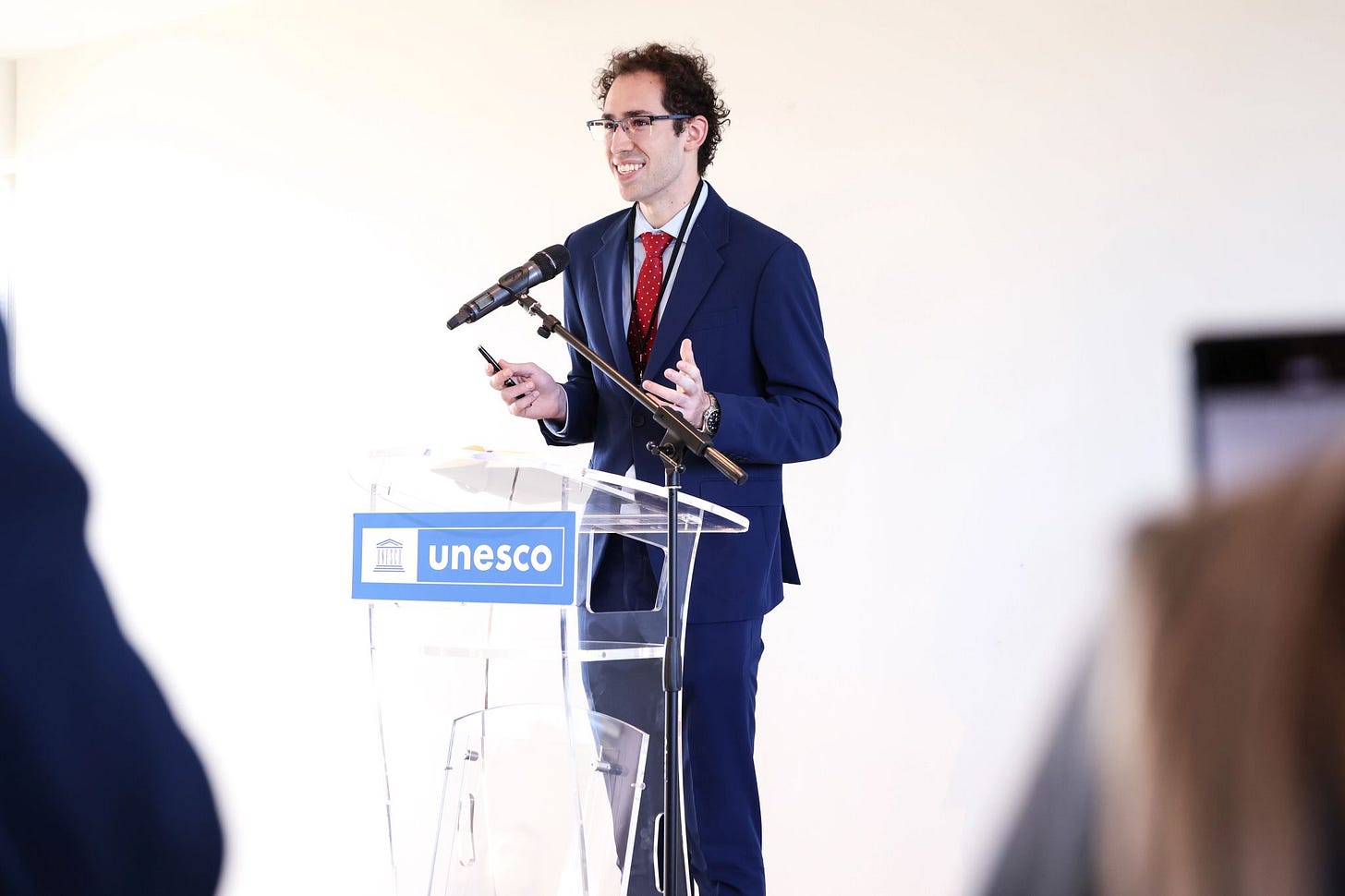
Student Voice at UNESCO Digital Learning Week, Paris
In September, two members of our Student Council, Conrado and Emily, travelled to Paris to represent young people’s voices at UNESCO Digital Learning Week. Alongside our collaborators from the Department for Education and AIEOU at the University of Oxford, they spoke at UNESCO Headquarters to reflect on the impact of this year’s AI Summer School and make the case for why young people should have a meaningful role in shaping the AI systems that will influence their lives.
It was a room full of policymakers, researchers, and technology leaders, and our students held their own!
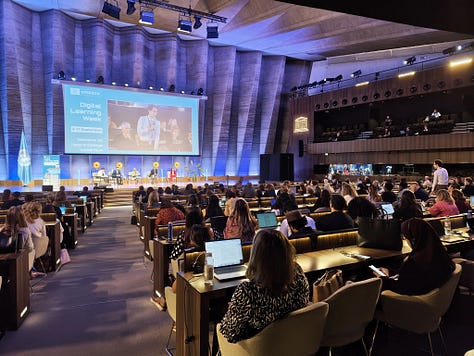
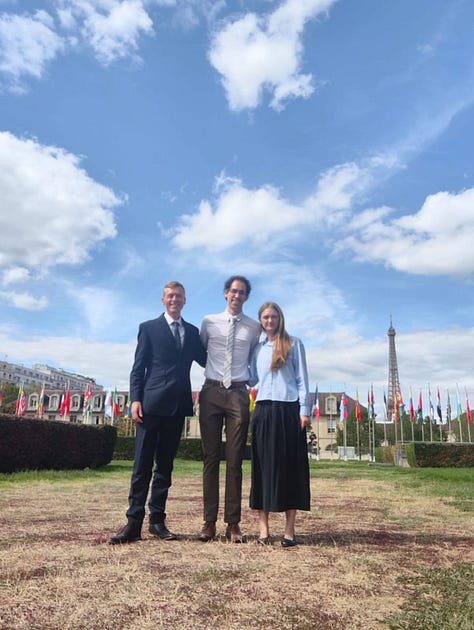
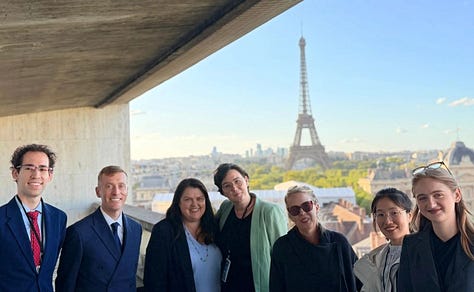
Here is Emily's reflection of the week
Last week, I got the chance to represent the GFF Student Council at the UNESCO Digital Learning Week in Paris. This opportunity opened the door to rooms where the most influential people in education and technology were, sharing their knowledge, experiences and expectations for the future of education in this AI-driven world.
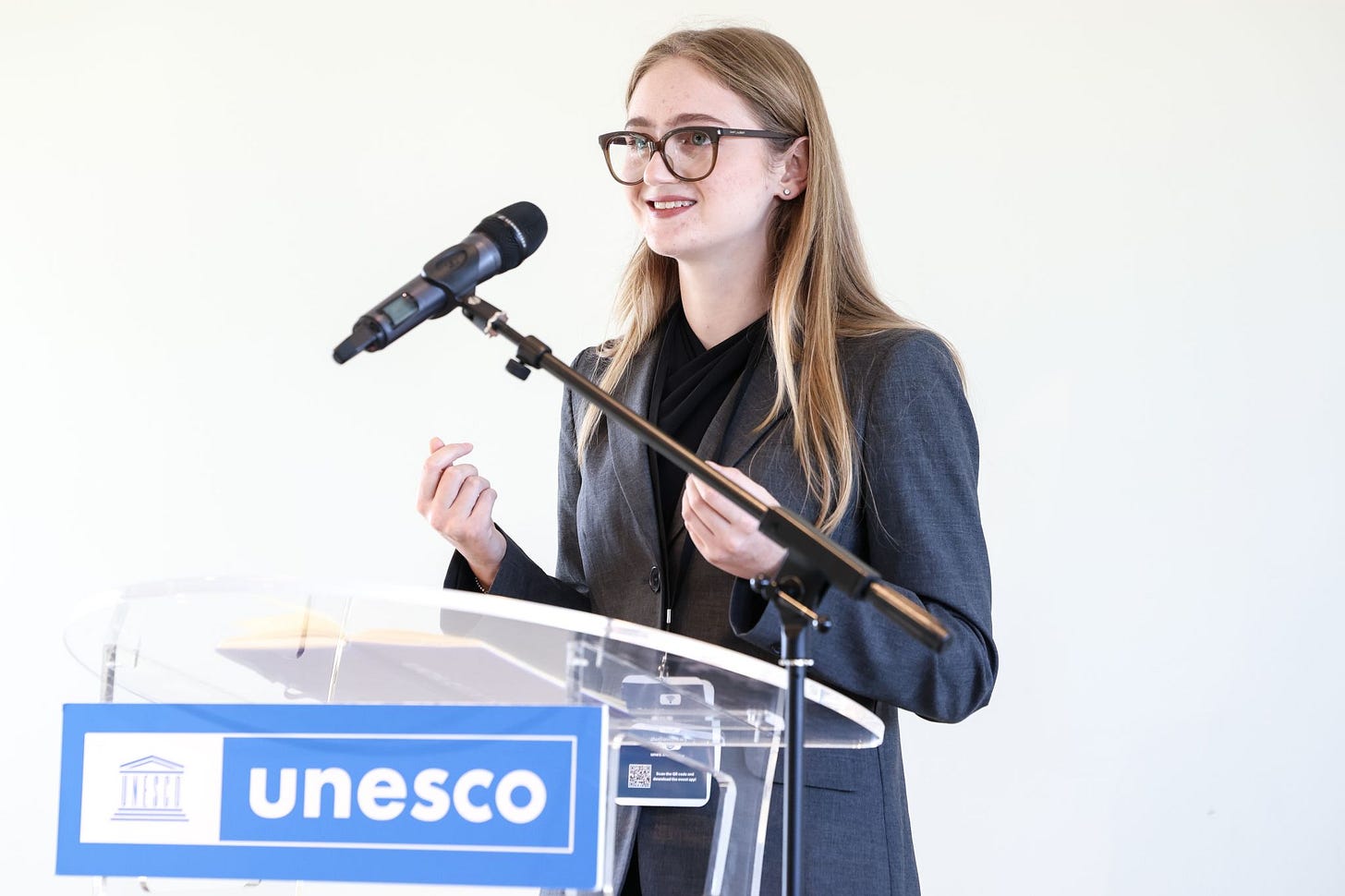
Sitting in conferences, panel discussions and fireside chats, soaking in all the information, here are some of the most prominent topics that were discussed.
- Teachers and students at the centre of decision-making: Hearing from leaders and tech entrepreneurs was empowering, but the voices of the users of the technologies stood out. If we want AI to be of service to education rather than a constraint on it, then those who will be most affected need to be at the center of decision making. Consultation groups, trials and focus groups are essential when developing new technologies or usage policies. As a student, I felt this was particularly reflective with what we, at the council, advocate for.
- The responsibility needs to move back to technology developers: Regulation today constrains users and makes the integration of AI quite bureaucratic. Rather than imposing limitations on schools, teachers and students, maybe the focus should be brought back to AI firms. Implementing strong guardrails and guidance would ensure accountability from big tech, and would protects users.
- The risks associated with AI are still unknown: Despite the considerable space the technology is taking in our lives, we still cannot quantify the benefits or the potential downsides of AI. It is unclear if it is productive in the context of education, if it has any impact on cognitive and learning abilities, or if it really makes the learning experience better. During this DLW, we witnessed many calls to action to continue research in this field, which reflect the urgent need for evidence to guide decision making.
- Research and policy need to be highly collaborative and tailored: As I learn more and more about AI and its place in the education sector, I realise that its scope is much larger than I first imagined: decision making around AI encompasses all fields of work, from education to law, including computer science and behavioural psychology. Research needs to be cooperative, across all of those sectors, to reach a consensus. However, it should also be specific to regions, levels of education and methods, to adapt to cultural and strategic needs of education providers.
Overall, this week has been a wonderful opportunity to speak with people who are making such a great impact in policy. It was wonderful feeling heard, and feeling a part of the conversations which will influence decision making. I am looking forwards to seeing how the narrative evolves in the next Digital Learning Week. Thank you again to everyone at Good Future Foundation for inviting, and for giving me the opportunity to speak.
Conrado, who also attended the week, shares his perspective
UNESCO Digital Learning Week was indeed an amazing opportunity to speak with researchers, teachers and policy makers from all over the world, who are currently developing AI policy on education. I cannot be more grateful to GFF and Daniel Emmerson, who has faith in the youth having the floor to speak up for the future generation. I was honoured to speak on behalf of our Student Council, conformed by amazing students from all over the world engaging in projects to spread AI ethics and regulation. There, I realised that youth voices really matter to policy makers, I felt that what I had to say was really valued.
Last but not least, this opportunity also raised to me a concern about the environmental impact of GenAI tools, and the lack of attention it is being paid by policy makers worldwide. Perhaps it may be something that we should speak up about being the future generation.