Dr Fiona Aubrey-Smith: Stop Buying Tools Before You’ve Answered This

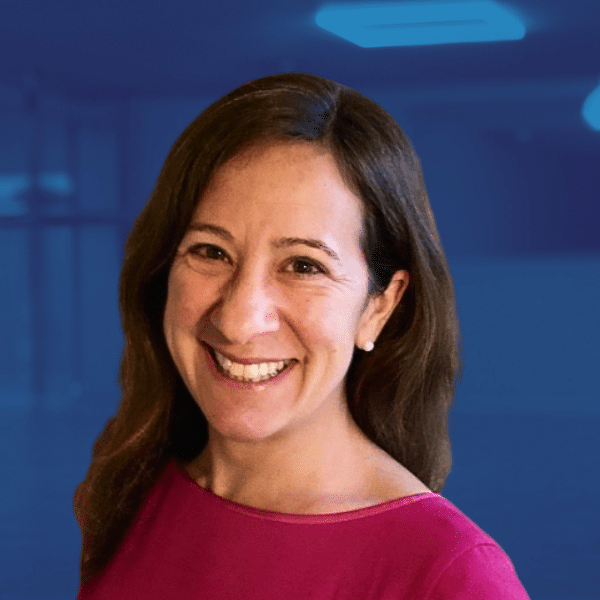
Named in 2024 as one of the Top 5 Visionary Women in Education, and in 2025 as one ofthe Top 50 Influential People in Education, Dr Fiona Aubrey-Smith is an award winningteacher, leader and academic with a passion for supporting those who work with childrenand young people. As Founder of PedTech and Director of One Life Learning, Fiona worksclosely with schools and trusts, professional learning providers and EdTech companies. Sheis also an Associate Lecturer, PhD supervisor and Consultant Researcher at a number ofuniversities. Fiona is Co-founder of the National PedTech Partnership and Open School UK,and sits on a number of advisory and charitable boards; championing learner agency,practice based research and forensic thinking about the structural support for learning.
Co-author of the best selling book From EdTech to PedTech: Changing the way we thinkabout digital technology, Fiona is a regular contributor to events and publications aboutEducation, Pedagogy and Education Technology. She is a Founding Fellow of the CharteredCollege of Teaching, and has been awarded Fellowships by RSA, NAACE and the HEA.
In 2023, Fiona was made a Freeman of the Worshipful Company of Educators (becoming aLiveryman in 2026), and in 2024, Fiona was granted Freedom of the City of London.
In 2025, Fiona was named EduFuturist of the Year 2025.
Video
Transcription
Daniel Emmerson 00:02
Welcome to Foundational Impact, a podcast series that focuses on education and artificial intelligence from a non-profit perspective. My name is Daniel Emmerson and I'm the Executive Director of Good Future Foundation, a non-profit whose mission is to equip educators to confidently prepare all students, regardless of their background, to benefit from and succeed in an AI infused world.
Hello everybody, once again and welcome to Foundational Impact. I'm delighted to be joined today by Dr. Fiona Aubrey-Smith. Fiona, it's an absolute pleasure to have you with us today. How are you doing?
Dr Fiona Aubrey-Smith 00:41
Yeah, really well and thank you so much for inviting me to be part of this.
Daniel Emmerson 00:45
Oh, you've got a, you've got a colleague there. My colleague Wellington. Wellington, an essential member of the team.
Fiona, I'm a huge admirer and fan of your work because I'm sure many of our, our listeners are, we have a global audience with this podcast and so it would be great to have an initial sort of context setting from you, if you like, as to the sort of work that you're doing with schools. I know you touch on so many dimensions when it comes to technology, but are you able to give us a bit of an overview there? And just for listeners who are uninitiated.
Dr Fiona Aubrey-Smith 01:20
Sure. So I have the immense privilege of being an independent researcher working with a whole range of different schools and groups of schools. So these classrooms can be anywhere with learners aged three through to sixth-form to 16, 18, mainstream provision, specialist and alternative provision, and state funded and independent funded schools, all of whom are focused on understanding really two things. One, what's the relationship between pedagogy and the use of digital tools in a contemporary learning environment. And second, what are the real lived experiences of the young people in those classrooms? Because arguably too often in our education space we think about classroom spaces through the eyes of the teacher, the leader, the educator, what's in our plans, our policies, our timetables, our lesson plans, what do we intend to happen? And that's really about looking forward to what might come. And what we want to know of course is the true baseline, which isn't just what's actually happening, but it's how's that experienced through the eyes and the minds of the young people in our classrooms, those people we're ultimately all here to serve and how they're internalising that and making sense of themselves as a learner because that's what's going to demarcate what actually happens next. And that's really where we all want to start our thinking.
Daniel Emmerson 02:38
And what led you to this area of research in particular, because it's quite specific.
Dr Fiona Aubrey-Smith 02:42
It is very nuanced, isn't it? So I'm a teacher and a school leader by training, originally. And then. And then I moved through a number of roles, working with large groups of schools, sort of national, regional, and national advisory spaces. One of the things that became really fascinating to me through my own doctoral journey was how one aspect of pedagogy can be interpreted in such vastly different ways. I'll give you a really specific example. I was working with a group of schools, and there was a policy that teachers would welcome the students into the classrooms by greeting them by name at the classroom door and then welcoming the students into the room. And the students would come in and sit down. Something is probably familiar. And lots of classrooms, lots of schools. What was really interesting during that research, though, was where teachers would kind of do that for very different reasons. The policy is the same, the monitoring of is the same, but the implications are different. So in one classroom, we had a teacher who was, you know, welcome, Daniel, to the classroom. Good morning, Come on in. It was a common sit down, come and be in my territory, in my space. I'm the authority, I'm in charge. Come in. There's a sort of hierarchical inference to the classroom, welcome. In another classroom, a teacher would say, good morning, Daniel, and she's reading you. What have you brought to the classroom this morning? How are you feeling? How confident are you? Who are you looking at? What are you worried about? What are your shoulders doing? And all of that. What she's doing is looking for insights. So what do I as teacher, need to do differently to help you make this lesson most effective? So at surface level, the practice is exactly the same. A welcome to the classroom or come on in. But because the belief systems underpinning that were very, very different with those two examples, the way that that experience then affects what happens next in the classroom, what complete polar opposites. And the same thing happens with any element of pedagogy and practice. Anything that we talk about doing, or any kind of pedagogical approach, teaching strategy, learning strategy, whatever that we bring in, can be interpreted in a number of different ways. We kind of know this instinctively, don't we? So. But when we look at the implications of that, it can have such a massive, massive impact on what young people actually experience. And that's where this source of fascination really comes from.
Daniel Emmerson 04:58
Well, just thinking about your example there, and it's a great example. It triggered a few ideas, I suppose, in my mind, about experiences that young learners might have in both instances. And my immediate thought was, was, you know, one of belonging and how important belonging is in a classroom setting and the impact of even an interaction such as that, the entry point to the classroom, to feel as though you belong in that space and you have a degree of ownership in that space as a learner, regardless of, of what age you might be, is integral, I suppose, to how you're able to learn and how you're able to adapt your thinking and how you're able to engage with the subject. And I know that belonging is perhaps one aspect of what it means to feel comfortable and part of a community and part of a learning experience. But you've also talked quite a bit in the past as well about dignity. And I think there's probably a link there, isn't there, between belonging and dignity and how that relates to what learners can achieve in a learning environment. I'm wondering if you can talk us through perhaps the dignity angle that I've heard you speak so wonderfully about in the past and why that's so important to consider for teachers.
Dr Fiona Aubrey-Smith 06:18
Oh, it's massively, massively important. And just to go back before I go forward, this thing about belonging and dignity all comes back to when a young person enters a classroom, they'll have a sense from the very moment they go into it, of course, what's the point of this classroom? Who's this classroom for? Who's this classroom not for? What's the point of being in this school? Is this school and what this school does, is it relevant to me as a learner whose needs. Who's the most important person in this space? Is it the teacher? And as one student put it, the students are there to be an audience for the teacher to do what they want to do? Or is it the most important person, each learner individually and that sense of I matter here, I belong here, my learning matters to the environment around me and those around me will help me learn and, you know, everything in between. So that kind of like, what's the point of school? Is kind of where we need to start. The wonderful late Professor Sir Tim Brighouse and Professor Mick Waters wrote a lot about this in their brilliant book about our school. We don't have a wide scale agreement on what the point of school is. And my own research now with thousands of educators, when I've asked that question and workshopped through, you know, what's the point of school? What's the role of a teacher? What does it mean to be a learner? We don't have a uniform agreed view across the sector at all. We have a number of similar and a number of contrasting views, but there's, there's no uniformity. And so that really matters because then when we use things like, or we talk about things like our class, the class lesson, scaffolding, teaching, learning, like what do we actually mean by that? So they're pretty big questions going on in the background. But to kind of lean that forward into your, your point about belonging and dignity when we're in a classroom moment, and let’s say we take a persona of a child who's really struggling. And they're used to struggling because unfortunately for this child, most lessons are a struggle. And they know that they might be in a brilliant school who offers them support and scaffolds and help and the great teacher, et cetera. But there'll be a point at which the student stops asking for help. And we've tracked this in some of the research. Like how many times will a student typically ask a teacher in an average class, one teacher, 30 students, 45 minute lesson, you know, how often will they actually ask for help? And usually it bottoms out somewhere between one and three times in a lesson. And these might be students that need help dozens of times in a lesson. So, you know, what's the false ceiling going on in terms of how often they'll ask for help? At the other end of the range of things, we might have a really capable, really confident, highly skilled, very efficient student who's just able to get on and run in terms of what they're doing. And maybe it's because what's been offered to them isn't challenging them quite enough. They could go further, they could be pushed further, deeper, you know, whatever that looks like. How often will that student, let's say in a secondary classroom, say, please sir, I want harder work, please make me think, how often does that happen in a teenage environment? Particularly not so often. So are we creating a false ceiling for them as well? And this is where the dignity piece comes in. Because there's all kinds of ways that we can offer support and stretch and challenge without other students needing to know that that's being given. Okay, it's not a case of having to put your hand up or be seen to ask the teacher or to walk across the classroom and get a resource. There's other ways we can do that. And digital plays a really powerful role in bringing that to the desk and the fingertips of the individual student. So, you know, dignity in learning, access, sense of purpose, what's the point of school? And then like what does it mean for me as a learner?
Daniel Emmerson 10:01
There's something there, though, just to sort of play. Play devil's advocate in our. In our thinking here. Of course we're going to get to technology and what sort of opportunity and also challenge that might bring to these environments. But isn't there something, Something important about having to. To raise your hand and overcome a feeling of vulnerability in order to ask for help, in order to get support, in order to access content differently? I'm mindful there's a tension there and I just wonder what your thoughts are around this and how important are those. Those moments of vulnerability and overcoming them?
Dr Fiona Aubrey-Smith 10:40
Absolutely. And I suppose what we want to do is just tease out where it's important to be vulnerable within ourselves and be. And recognizing where we need help and where we need support and allowing that cognitive friction, that vulnerability that needs to come to the surface. And the social dynamics of appearing vulnerable in front of peers who may or may not support that vulnerability. And what we want to do, perhaps, is think of those two separately rather than merged, which is typically what happens. They're all sort of in one spin. Ideologically, every single human would be fully supportive of everybody else's unique and individual and diverse needs and so on. Ideologically, that's exactly where we want to be. The reality of the world we live in is that's variable in terms of what we see in action. So what we want to do is in spaces that maybe that's not so achievable in. Or achievable is maybe the wrong word, that we don't see that so much in some spaces. And they're typically spaces where there are other confounding issues or challenges and that might be to do with, you know, the teenage years or the social space or, you know, the demographics or. That's the wrong word. The. The nature of the group of people in the classroom and the things they bring in, you know, the different kind of personal capital they bring into the classroom, those create another layer of dynamics. And what we want to do is recognise that, work on that, but not have children unable to access the support stretch challenge they need whilst we work on those things as well.
Daniel Emmerson 12:12
So let's think about this then, through the lens of technology. I'm mindful that we've thought about vulnerability from different perspectives. And of course, with technology, there are many aspects to what that can do as well in this space, when it comes to asking for help and being able to provide support and differentiate. How does technology fit into that picture initially? When you're looking at something, I mean, we focused on belonging, we looked at dignity. Technology perhaps helps students who don't feel that they belong because they can almost instantly get the support that they might need through a device. Where does one begin to think about the role of technology in the classroom from a pedagogical perspective?
Dr Fiona Aubrey-Smith 12:57
Oh, very, very, very good question. And it's the most important question, I think. So I think the key thing is to go back to those big questions first, what's the point of school in our own specific contexts? If we're leading a school, teaching in a school, what's the point of the school? What's the role of the school in terms of the young people's lives who are in that classroom? Where do you want to start? Where do you want to stop? What do you want to support with? What don't you want to support in being clear on that, then what's the role of the learner in that space? What do you want them to be able to do? What. What do you not want them to be able to do? And to kind of understand what that looks like? And then what would learning feel like within the context of what's the point of school and what's the role of a learner? What does the learning experience? How would we characterise that? And then, and only then, what's the role of the teacher? And how is the teacher going to enable, facilitate, support, scaffold, guide, you know, however you want to interpret, what it means to be a teacher in enabling those things to happen. Once all of that has clarity, then we become, okay, in order to make that happen, in order to operationalise these great big wonderful ideas, we've got to do some stuff. And when we want to do that stuff, what's the most efficient tool, digital or non digital, human or non human, to actually make that stuff happen? I probably shouldn't use the word stuff, but it's not very technical. How are we going to actually bring it, bring it to life? Actually, then the digital fits in as supporting, extending, enhancing or staying away from really nicely because we know what we're actually trying to do from a very deep pedagogical, principled way. I think the mistake that often happens is that we start with the we've got these digital tools, or we've got these physical tools, or we've got these paper tools or these chairs, this front of class board, these slides, the schema work, whatever. We start there and we think, right, how are we going to use that?
Daniel Emmerson 14:51
Right?
Dr Fiona Aubrey-Smith 14:51
And it's a false economy because we're then sort of trying to shove it in somewhere with good intentions, but actually we kind of almost don't know why we're using it. And then someone says, well, how effective is it? And you sort of think, well, it either is or isn't. And how effective is it compared to doing that instead? Well, we don't know because we don't know why we'd choose one or the other in the first place. So we just need to go backwards to go forward sometimes I think.
Daniel Emmerson 15:14
So I mean, these big questions that you need to be starting out with in order to get that experience right, is it possible for the technologies or the capabilities of technology to influence that?
Dr Fiona Aubrey-Smith 15:26
Oh, that's an interesting one. So technology is an umbrella term, can mean a million different things in a million different ways, isn't it? And I think this will sound like I'm deflecting the question, but I sort of think we could also say, are humans able to achieve that?
Daniel Emmerson 15:42
Right?
Dr Fiona Aubrey-Smith 15:42
And we suddenly go into, well, it's kind of what we choose to do or what we don't choose to do or what type of person we are, what strengths we've got, what characteristics we've got, how we view our interactions with other people. Like we, we straight away when we think the same question, but for humans, we straightaway go into the nuance and all we need to do is just apply that same nuance to digital. Really. I think what I mean, what do you think, Daniel?
Daniel Emmerson 16:05
Well, I spend a lot of time working with schools on AI strategy and guidance and support around how to adapt as a consequence of what this technology is capable of. And it feels a lot of the time like it is adaptation because this technology at least appears to be in areas that extend beyond the classroom. So for classroom teachers, they might not have an interest in learning how gen AI tools work, but I would support the idea that teachers across both primary and secondary settings need to have an understanding, even if it's a very surface level understanding as to what this technology is and how it might be impacting the lives of the young learners in their classrooms while they're not in school. Because we know from the data, we know from the research in this space that learners from as young as seven are using the technology for both social purposes or purposes that don't specifically relate to education, as well as for understanding content, creating content, examining content, deepening subject knowledge. And so in this case, it feels very much as though school communities are having to adjust from external pressures concerning technology that is in so many cases being brought into the classroom or brought into learning environments without there being a solid strategy behind why that's happening.
Dr Fiona Aubrey-Smith 17:35
And we probably wouldn't have that same approach. We wouldn't bring like an adult off the street into a classroom and say here, go, like we wouldn't do that with things that aren't digital, would we? We wouldn't bring, you know, just another object that's in use in everyday society and then stick it in the middle of the classroom.
Well, there are scenarios where we would if we were using it as a stimulus for catching like a hook for a new topic or something like that. But we, we always do it with a purpose. We always bring things into the classroom. Not always. We mostly bring things into the classroom with a purpose to either be provocative or to support in a particular way or, you know, whatever that might be. And we just shouldn't treat digital differently to that. If it's going to be in the classroom, it needs to be needed by that classroom space to support, extend, enhance or so on. And also we need to be clear, not just from a safeguarding perspective, but from a cognitive safeguarding perspective about where we should and shouldn't be using those tools. I mean, all sorts of things in a classroom. Scissors, for example, we bring them into a classroom to use them for specific tasks. We keep them safely, we learn rules about how we carry them, how we hold them, how we use them, we get them out when we need them, we put them away and we don't run around with a blade open throwing it about. Like we know to do that. And we shouldn't treat digital any differently from those sorts of things.
Daniel Emmerson 19:01
So I'm wondering from your work, and I know you recently published a fantastic piece with Haileybury in particular, that really resonated. But when you're working with schools that have identified or have begun their digital strategy through the lens of purpose, what could that look like? And what has that looked like in some of the schools that you've worked with?
Dr Fiona Aubrey-Smith 19:24
Well, it's interesting actually, because the work at Haileybury is a really good exemplification of the way in which a pedagogy first approach to the use of digital raises some really great questions that are actually challenging the thinking about how the school can better meet the needs of the young people within it that might not then be to do with digital at all. And we see this across. There's a whole number of different, similar impact studies and these themes are coming out of all of them now. So things like If I just use Hayleybury as an example, things like, because they have an embedded one to one on demand digital provision. And the key thing there is it's about on demand at the point of need. It's not just about having one to one digital provision. And they've got a very carefully curated digital package of tools available for students and a very comprehensive infrastructure so that things like wireless can be indoors, outdoors, you know, is equitable everywhere, all those sorts of things. It kind of liberates teachers to think a little bit more creativity, well, a lot more creatively about where learning's happening and shifting away from some of the kind of historical defaults. So for example, we go into Hayward Classroom and they've got traditional classroom furniture, desks, chairs, but there's not like an immediate default to always be sat at them. It's, it becomes much more of a, well, what task are the students going to be working on? No, go back even further than that. What is it that we want students to be learning about or doing or developing? And then how are they going to do that? And if they're working as a group and they're, you know, planning an activity or planning a presentation or having a debate about a point or whatever it might be, do they really need to be sat at a table to do that? Do they need to be sat in rows? These are, you know, teenagers, young people, they're not designed to sit still for long periods of time, are they? For the most part. So you see in those classrooms, well, they've, they take their pads and they move to different spaces. They might be stood up by like a working wall, like a glass wall, or they might be sat around a picnic table outdoors, where they're benefiting from fresh air, fresh light. They might be working in a kind of study space or they might be at a classroom table. It doesn't really matter. They've got that, that iPad provision with their resources, with their tasks, with their instructions on it, and it goes wherever they go. So they can stand up, they can move. And what that does is it changes how they interact with each other. Because then when they're moving, those that like to stand still, can those that like to sort of fidget to help concentration, which is common for teenagers, can those that want to face each other directly or side on the body language and how that affects their confidence, their anxiety, their social interplay, those things are kind of naturally factored in. So it just is really shifting how teachers think more holistically about not just what's to be done in the lesson, but the ways in which it could be done in a way that leans into what's best for Generation Alpha Gen Z students and their needs of today. And I think you've seen that, you know, in your own visits to Haileybury as well, haven't you?
Daniel Emmerson 22:25
That's for sure. And it is a quite a unique school. And I'm mindful that you mentioned the different types of school as well that you work with as part of your, your, your research and your day to day. How might those sorts of experiences play out in a perhaps less well resourced institution?
Dr Fiona Aubrey-Smith 22:43
Well, if I go, you know, completely to a different context and there's a, a brilliant multi academy trust I work with that actually not very far from Hayley Bay called Connect Education Trust and some of the schools there have, you know, some of the highest levels of disadvantage in their communities. But the children again, because of the very thoughtful leadership of Anjula and Alan and Gulev who lead the trust, they've given a digital provision again, one to one on demand provision. And the children there are using that interestingly in very, very similar ways to move away from kind of static, historical ways of working. You'll notice when I frame this, I talk about it as being on demand at the point of need, not just like they've got laptops because the distinction is really, really important. There's a lot of work I've published about the impact of on demand one to one provisioning. But I also been in schools who have one to one device provisioning and I really, really wish they wouldn't because they're so focused on using it in every lesson for every child. They kind of individualized and isolated children's working and it is just absolutely disastrous and hideous. But that's because they've got so focused on the tool first and not really thought pedagogy that it's very predictable. Where of course in any school environment where we think about the pedagogical stance first, that those big pedagogic questions and then we bring in digital or non digital tools to support, extend, enhance or stay away from that, that's where we see the impact. But what we're seeing in Connect with those very different kind of catchment variables, if you will, is that children are having an introduction to the way digital tools can support them within a classroom environment, within a school environment, and then they're able to take those outside of school away into a home space. And it's really nuanced but really impactful the difference that makes. Because they are then empowering their families, their parents, their siblings to help them at home without having to lean into the skills, the economic capabilities of the home environment to be able to do that. They're taking the connectivity with them, they're taking the familiarity and the skills and the access to resources. You know, rewire the teacher help videos, knowledge organizer, bag scaffolds, you know, auto mark, real time quizzes, all sorts of things like that that they're taking them with them. And because children then are able to do that between home and school, they stop seeing learning as just something that happens at school and they start seeing learning as something that's for them, their life backpack of skills. And because of that they become much more engaged with the whole process and concept of learning. They see themselves as a learner and of course motivation and capability follow on from that. And that's why if you look at sort of Connect traditional accountability metrics, all the most recent inspections have been outstanding. Their kind of end of key stage results are way above national and growing. You know, the proof's in the pudding in terms of the impact it has.
Daniel Emmerson 25:33
I've had the privilege of visiting at least one of their schools with Gulev. I've seen that in action. It's phenomenal to see a really, really unique experience. I didn't know that they were working with you, Fiona. Perhaps that's an indication of how they've got to this point. But that's brilliant, brilliant to see. I'm wondering then, so across so many different types of school that you're working with, how often Gen AI tools come up in your work and how do people tend, how do leaders, teachers tend to approach you about the implications of Gen AI in a school environment?
Dr Fiona Aubrey-Smith 26:08
Oh, it's a big, it's a big question that one, isn't it? And we see, I would say we see sort of two types of space at the moment. It’s because it's a very nuanced question, I suppose. One space is where schools are thinking carefully about how they might use all kinds of different AI tools, Gen AI and other forms to support their staff productivity and workflows. And that's, I'd say that's a majority of schools are now in that space to greater or lesser extent. Sometimes the leadership team have absolutely driven that forwards and sometimes that has come up much more organically that teachers are doing things and that then leaders try to kind of bring some sense of connectedness to that and there's all sorts that's kind of well publicized about the importance of Putting all sorts of safeguards and measures and training and thought around that and so on. I won't touch into that. The other space that's really interesting is about the way that Gen AI tools are being used from a student's perspective. And I just want to lean into that because there's some really interesting things coming out at this at the moment. And I'd say there's two things. One of them is to do with the sequencing of generative AI image creators. So you pop some text and it gives you an image back. And there was this kind of flurry of oh, this is fun, you know, we've created images, isn't that wizzy that we're kind of starting to get through the other side of. And the very best examples of that specific thing we might have, let's say key stage two, descriptive tools and one of them is to do with the metacognitive loops that happen when we use certain tools. So the sequencing bit and I'm going to lean back into Tom Wade's work at Haileybury for a second on this because I think it's just a really great example. In the impact study that we carried out, we were listening to students in focus groups, course sort of Key Stage 3, 4 and above, talk about the way they might capture their understanding in lessons utilising GoodNotes and they would collate those in that beautifully multimodal way that they're able to do through GoodNotes that you know, they can capture handwriting, they can capture sound, they can annotate slides, they can make mind maps, all these beautiful things that, that make the best of digital and take the best of what we know about how knowledge is stored and recalled from traditional methods as well. It really brings the two together beautifully. So they would capture that and then they would use those notes to then create sort of summaries using one AI tool that they would then use another tool to create flashcards or mind maps, sorry, mind maps from and then they would use the mind maps using another tool to create it into flashcards and then they would create use another Gen AI tool to think about the syllabus and the things they were revising to create for themselves like practice papers or multiple choice quizzes. They'd practice those and then they'd pop those back in to have the Gen AI mark that for them and give them personalised feedback of what they then needed to focus their revision on. So what they've done is kind of chained together a whole sequence of different AI tools and uses of tools in a way that starts with the teacher in the classroom and them as learner in the classroom, the human and uses the kind of all of those traditional classroom mechanisms for capturing that experience and then uses the best of digital to kind of loop those all together to help them do tasks that are offline. So they're revising from their flashcards, say they're not cognitively offloading that revision process they're using the digital to augment what they then do offline, which is the powerful piece of it. So I mean that's that kind of upper secondary sophisticated level of. The other version or the other interesting thing that's bubbling up is so a common one in primaries at the moment is using Gen AI image creator. They create their piece of writing, they pop it into the image creator, they get the image out of the back of it. What's been fascinating, and there's a study due to be published shortly that looked at this in depth. We worked across three trusts and we tracked the impact in terms of feedback cycles of what happens. So children look at their image, they think in what ways does it fit what I had in mind and in what ways does it not? And then edit and improve their descriptive writing piece. You know, up level the vocabulary, up level the descriptive phrases and so on. And typically they'd go through four, five, six, seven cycles of editing and iteration with that. Now, have you ever seen a key stage two child edit something in a book seven times, like ever? Like once or twice maybe, before they get to the point that one child called it, I graffitied my own work and then the teacher graffitis it and then I have to graffiti my own work again. And we've got this thing about presentational importance in key stage two. But you know, sort of 10, 11 year olds particularly, and therefore that becomes a barrier to wanting to edit and improve the content. So this kind of usage of AI as part of that process is really making a difference. And what we found is it has a direct impact then on the quality of vocabulary and the quality of the grammatical like clauses within a sentence and the way that they're used and all those sorts of things. And that's really, really interesting because you'd think that doing that would be like to cognitively offloading the writing process, but what it's doing is not just turbocharging the edits and improvements, but it's making more feedback loops happen as a result. And that, I think that's really, that wants, that wants exploring more, doesn't it?
Daniel Emmerson 31:16
But it sounds as though that was very much driven by what do we want to achieve as a class. Say, we want our young learners to be using more descriptive language, we want them to be using more complex sentence structures and we want them to be invested in the impact that their words might have. It sounds like that's the starting point. And then the output is, oh, a cartoon superhero that they've created because they're so. Or they, they might be very critical over visual representation of their words that doesn't quite reflect what they have in their mind. So they, they have this sense of ownership as well. Is that right? In terms of getting the sequencing of. We start with our problem, we think about the benefits potentially for the learner and then the technology bit is the thing that supports this and makes that happen.
Dr Fiona Aubrey-Smith 32:09
Absolutely. And that's the heart of this global shift from edtech to pedtech, this tool first mindset to a pedagogy first mindset. And the really great thing is with that particular example, when feedback's given through an AI generated image or through automated real time digital marking system or whatever it is, it diffuses the emotional element of the feedback because it's not a human giving you feedback and therefore subconsciously, it's not a human judgment on you as a person, it's just playing you back what your content gave. And that makes quite a big difference in terms of emotionally how it's received by children and adults. Actually, we find that the same thing. But the point you're making is so important is this shift from how can we use these tools to instead say, well, let's learn from the research. We know that it should be a pedagogy first approach. So let's go back and think about that pedagogy first. You're absolutely right.
Daniel Emmerson 33:03
I'm wondering, Fiona, what might be the best way for folks listening to find this research and these publications that we've been speaking about. Do you have an online bank of resources? Where can people get a hold of these studies?
Dr Fiona Aubrey-Smith 33:17
This is, this is where I get very embarrassed because I should be more organised with a glossy website with everything in one place. And there is, there is a website, onelifelearning.co.uk, but it's not up to date and it's not got everything there. The best place is all of these reports that I've been talking about we publish via LinkedIn. So that's the kind of, probably the best place at the moment to start to capture all these. And there's lots of impact studies for primary, secondary, special, for groups of schools, individual schools, and lots of insights in them.
Daniel Emmerson 33:46
Thinking through then how or some of the conversations that we've had with school leaders where they're grappling with these questions, right? They know that there are these external factors that are pushing them in a certain direction. When it comes to digital, particularly AI, what might you say to school leaders who feel like they should be addressing this more cohesively in their schools, but they just don't know where to start?
Dr Fiona Aubrey-Smith 34:08
So I would say the. Go back to that big, big question of, and it sounds almost too big for AI, but go back to that big question of if you're leading a school, what's the point of your school? And, and I don't mean the vision statement of the school with the beautiful ideological words about supporting every child to be the best they can be. And those wonderful things like, let's get a bit more tangible. If we closed all the schools in the world, your children, what would they actually miss out on that they couldn't just get or do another way? And what you land on, that's the point of your school to you. And then when you've got that sort of clarity on, like, what's the human value add that you're offering to these young people, then around that, okay, in order to give the greatest human value add to those young people in your context, what can we automate? What can we speed up and make more productive? What can we augment creatively? What can we nurture that digital and AI is part of that mix that those tools can help us with so that we can then free up that capacity to be more human. And what we want really is if human beings are considered an important part of a school context, educators, leaders, pastoral, et cetera, then actually we want those human beings to have as much of their time being human as possible, rather than doing all these sort of automated bits. And I think that's part of the role of AI is to create capacity to be more human. The other part, of course, is that AI can break us free from the school walls, from the limitations of time and place, from the limitations of our own skills and imaginations. And I think we need to embrace and think about those things as well. But arguably that should come second after we first thought about how we can become more human and really, really invested in that.
Daniel Emmerson 35:55
What a lovely place to wrap up. Fiona. Thank you so, so very much for sharing those insights and energy as always. Truly, truly appreciate it. And I'm sure our listeners do as well. So thank you ever so much indeed.
Dr Fiona Aubrey-Smith 36:08
Thank you so much for having me, Daniel.
Voiceover
That's it for this episode. Don't forget, the next episode is coming out soon, so make sure you click that option to follow or subscribe. It just means you won't miss it. But in the meantime, thank you for being here, and we'll see you next time.